
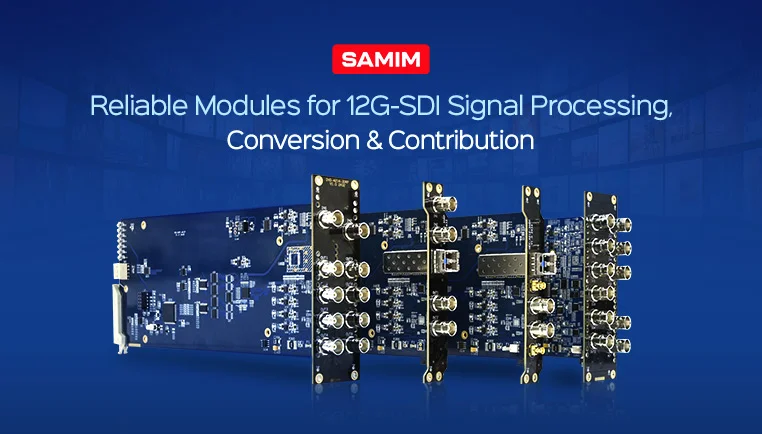
In modern broadcast environments, delivering high-quality video over long distances without signal loss is a constant challenge. As productions move toward ultra-high definition formats like 4K and beyond, traditional copper-based transmission methods face serious limitations. This is where a 12G-SDI to Fiber converter becomes a critical component in professional video workflows. By converting electrical SDI signals into optical signals, broadcasters can achieve greater reliability, distance, and performance in video transmission.
Understanding 12G SDI in Broadcast Systems
12G SDI is a high-bandwidth video interface capable of transmitting uncompressed 4K video at 60 frames per second through a single cable. It is widely used in live broadcasting, studio production, and post-production environments. While 12G SDI offers excellent image quality, its performance over standard coaxial cables is limited in distance. Signal degradation, interference, and attenuation become noticeable as cable runs get longer.
This limitation creates a need for a more robust transmission method that can support high data rates without compromising quality.
Why Fiber Optic Transmission Matters
Fiber optic lines send data using light rather than electricity. This makes them immune to electromagnetic interference, radio frequency noise, and grounding issues that commonly affect copper cables. Fiber also supports much longer transmission distances, often extending several kilometers without signal loss.
When a 12G SDI signal is converted to fiber, broadcasters gain the ability to move high-resolution video across large venues, campuses, or remote locations with consistent performance.
How a 12G SDI to Fiber Converter Works
A 12G-SDI to Fiber converter takes the incoming SDI video signal from a camera, switcher, or playback device and converts it into an optical signal. This optical signal travels through a fiber cable to a receiving unit, where it is converted back into SDI for monitoring, switching, or recording.
This process is designed to be transparent, meaning there is no compression, delay, or loss of video quality. The signal that arrives at the destination is identical to the original source.
Improved Signal Integrity and Stability
Signal integrity is one of the best things about fiber switching. Copper cables are vulnerable to environmental factors such as electrical equipment, lighting systems, and power lines. Fiber transmission eliminates these risks entirely.
For live broadcasts, where stability is critical, this reliability ensures fewer dropouts, cleaner images, and uninterrupted video feeds. This is especially important for sports events, concerts, and news coverage.
Extended Transmission Distances
Coaxial cables used for 12G SDI typically support distances of up to a few dozen meters at full bandwidth. Fiber optic cables can extend transmission distances to several kilometers, depending on the fiber type and optics used.
This extended range allows broadcasters to place cameras far from control rooms, connect multiple buildings, or support large-scale production setups without adding repeaters or signal boosters.
Support for Future Ready Workflows
As broadcast standards continue to evolve, fiber-based infrastructure offers greater scalability. A 12G SDI to fiber setup can be integrated into existing fiber networks and adapted to future formats with minimal changes.
This makes fiber conversion a smart investment for broadcasters planning long-term upgrades or transitioning toward IP-based video systems.
Practical Applications in Broadcasting
Broadcasters use fiber converters in studios, outside broadcast vans, stadiums, and remote production sites. They are commonly deployed for camera feeds, program outputs, and distribution to multiple locations. The compact design and plug-and-play operation of many converters make them easy to integrate into both temporary and permanent installations.
Conclusion
A 12G-SDI to Fiber converter plays a vital role in improving broadcast video transmission by enhancing signal reliability, extending distance, and supporting high-resolution formats. By combining the quality of 12G SDI with the strength of fiber optics, broadcasters can meet the demands of modern production while building a more flexible and future-ready video infrastructure.

More Stories
SOLIDWORKS PDM, Simulation, Electrical, Manufacturing: One Partner in Vietnam
Erik Hosler Discusses How Lithography’s Growing Language Is Transforming Patterning
Deep Unsupervised Learning: Exploring Data without Labelled Examples