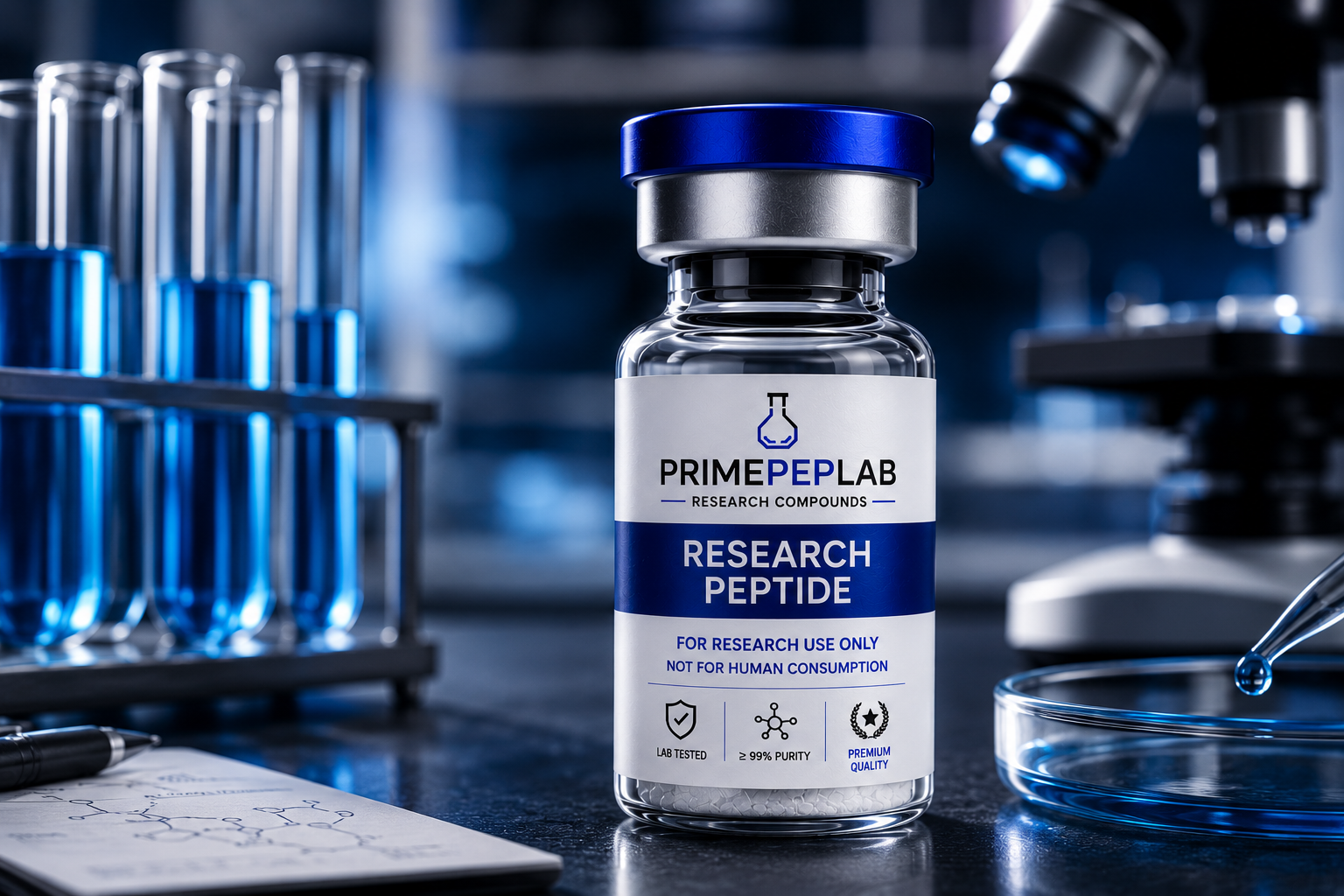
In modern scientific exploration, precision and reliability are essential for achieving meaningful results, and this is especially true in biochemical and molecular studies where even minor inconsistencies can impact outcomes. Within this demanding environment, Premium Research Peptides have become a cornerstone for laboratories seeking exceptional purity, consistency, and reproducibility. These high-quality compounds are carefully synthesized and rigorously tested to support advanced scientific investigations across biotechnology, pharmacology, and molecular biology. As research standards continue to rise, the need for premium-grade peptides has never been more important for ensuring accurate and dependable experimental data.
What are Premium Research Peptides?
Premium research peptides are short chains of amino acids that are synthetically produced and purified to meet extremely high laboratory standards. They are used exclusively for scientific research and are not intended for medical or therapeutic use.
These peptides are designed to replicate specific biological sequences, allowing researchers to study molecular interactions, protein behavior, and cellular mechanisms. What distinguishes premium peptides from standard versions is their superior purity level, structural accuracy, and rigorous quality verification.
Researchers rely on these compounds for experiments where precision and consistency are critical to achieving valid scientific results.
Why Exceptional Purity Matters in Peptides?
Purity is one of the most important factors in peptide research because even small impurities can significantly alter experimental outcomes. High purity ensures that the peptide behaves exactly as expected in controlled laboratory conditions.
Premium research peptides typically undergo multiple purification stages to remove unwanted byproducts. This results in highly refined compounds that allow researchers to isolate variables and obtain accurate results.
Exceptional purity also improves reproducibility, enabling scientists to replicate experiments with confidence and consistency across different studies.
How Premium Research Peptides Are Produced?
The production of premium peptides involves advanced chemical synthesis techniques, most commonly solid-phase peptide synthesis. This method allows precise control over amino acid sequencing, ensuring structural accuracy.
Once synthesized, peptides are subjected to purification processes such as high-performance liquid chromatography. This step removes impurities and ensures that only the desired peptide remains.
After purification, compounds undergo detailed analytical testing using techniques like mass spectrometry to confirm molecular structure and verify identity. This multi-step process ensures the highest possible quality.
Role of Laboratory Testing in Quality Assurance?
Laboratory testing is essential for verifying the purity and structural accuracy of premium research peptides. Each batch is analyzed to ensure it meets strict scientific standards before being approved for research use.
Testing includes purity analysis, molecular weight verification, and contamination screening. Advanced instruments such as chromatography systems and spectrometry tools are used to ensure precise results.
This rigorous testing process guarantees that researchers receive consistent and reliable compounds for advanced laboratory applications.
Importance of Consistency in Scientific Research?
Consistency is a key requirement in scientific experiments, especially when working with biological systems. Premium research peptides ensure that every batch maintains the same composition and quality.
Without consistency, experimental results can vary significantly, making it difficult to draw accurate conclusions. Consistent peptide quality ensures reproducibility, which is a fundamental principle in scientific research.
This is particularly important in long-term studies where multiple batches of peptides may be required over time.
Applications in Biotechnology Research?
Premium research peptides are widely used in biotechnology to study cellular processes, protein interactions, and molecular pathways. They help researchers simulate biological functions and understand complex biochemical systems.
These peptides are also used in genetic research, enzyme studies, and structural biology. Their precision allows scientists to investigate how biological molecules interact under controlled conditions.
Their versatility makes them essential tools for advancing innovation in biotechnology and life sciences.
Applications in Pharmacological Studies?
In pharmacology, premium peptides are used to study drug interactions, receptor binding, and biochemical signaling pathways. They help researchers understand how molecules behave within biological systems.
Although not used as therapeutic agents, these peptides provide valuable insights into drug development processes. They help scientists identify potential mechanisms of action and improve experimental drug models.
This makes them an important part of early-stage pharmaceutical research and development.
Analytical Techniques Used for Verification?
Several advanced analytical techniques are used to verify the quality of premium research peptides. High-performance liquid chromatography is commonly used to determine purity levels and separate peptide components.
Mass spectrometry provides detailed molecular information and confirms structural identity. Additional techniques such as amino acid analysis help ensure sequence accuracy and consistency.
These methods work together to ensure that peptides meet strict laboratory standards before being released for research use.
Importance of Storage and Stability?
Proper storage is essential for maintaining peptide stability and effectiveness over time. Environmental factors such as temperature, humidity, and light exposure can affect peptide integrity.
Premium research peptides are typically stored in controlled environments such as refrigerated or frozen conditions to prevent degradation.
Stability testing is conducted during production to determine how peptides behave under various environmental conditions, ensuring long-term reliability for research applications.
Quality Control in Peptide Manufacturing?
Quality control is a critical part of producing premium research peptides. It ensures that every batch meets strict scientific and analytical standards before distribution.
This process includes raw material inspection, synthesis monitoring, purification verification, and final product testing. Each stage is carefully documented to ensure traceability and accountability.
Strict quality control helps maintain uniformity across batches, ensuring that researchers receive consistent and reliable compounds.
Safety and Ethical Considerations?
Premium research peptides are strictly intended for laboratory research purposes and must not be used for human or animal consumption. Proper handling procedures are required to ensure laboratory safety.
Researchers must use protective equipment and follow established safety protocols when working with these compounds. Proper labeling and storage are also essential to prevent misuse.
Ethical research practices ensure that peptides are used responsibly in controlled scientific environments.
Technological Advancements in Peptide Production?
Advancements in technology have significantly improved the production and analysis of premium peptides. Automated synthesis systems allow for precise control over amino acid sequencing, reducing human error.
Modern analytical instruments provide faster and more accurate testing results, improving overall efficiency. Artificial intelligence is also being used to optimize synthesis processes and predict molecular behavior.
These innovations have greatly enhanced the quality, consistency, and scalability of peptide production.
Importance in Academic and Industrial Research?
Premium research peptides are widely used in both academic and industrial research environments. Universities use them for educational experiments and scientific studies, while industries apply them in product development and innovation.
Their availability allows researchers to explore new theories, validate hypotheses, and develop advanced scientific models.
A reliable supply of high-quality peptides supports continuous progress in multiple scientific disciplines.
Future of Premium Research Peptides?
The future of premium research peptides is closely linked to advancements in biotechnology, automation, and artificial intelligence. These technologies are expected to improve synthesis accuracy and reduce production time.
AI-driven systems may soon assist in designing new peptide sequences and optimizing laboratory workflows. This will lead to faster innovation and higher precision in research applications.
As global scientific demand increases, premium peptides will continue to play a crucial role in research excellence.
Conclusion
Premium research peptides represent a vital component of modern scientific research, offering exceptional purity, reliability, and consistency for advanced laboratory applications. Their role in biotechnology, pharmacology, and molecular science makes them indispensable tools for achieving accurate and reproducible results.
Through advanced synthesis techniques, strict quality control, and continuous technological innovation, these peptides ensure the highest standards of research excellence. As science continues to evolve, premium research peptides will remain at the core of discovery and innovation across global research communities.